Partner Helene Schjerfbeck
Queer Places:
Hietaniemen hautausmaa, Hietaniemenkatu 20, 00100 Helsinki, Finland
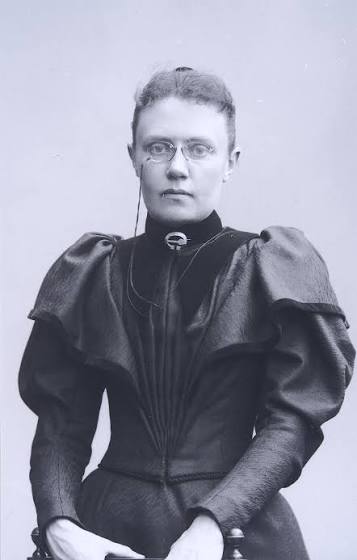 Helena Charlotta Westermarck (November 20, 1857 – April 5, 1938) was born on November 20, 1857, in Helsinki, Grand Duchy of Finland, into an educated and prominent
Swedish-speaking Finnish family. Her brother, Edvard Westermarck, grew up to become a world-renowned sociologist and philosopher. From an early age, Helena showed a profound
aptitude for the arts, leading her to pursue formal training at the Drawing School of the Finnish Art Society and subsequently at the private academy of
Adolf von Becker.
Helena Charlotta Westermarck (November 20, 1857 – April 5, 1938) was born on November 20, 1857, in Helsinki, Grand Duchy of Finland, into an educated and prominent
Swedish-speaking Finnish family. Her brother, Edvard Westermarck, grew up to become a world-renowned sociologist and philosopher. From an early age, Helena showed a profound
aptitude for the arts, leading her to pursue formal training at the Drawing School of the Finnish Art Society and subsequently at the private academy of
Adolf von Becker.
During her artistic training, Westermarck formed a foundational bond with fellow artist Helene Schjerfbeck, initiating a
lifelong friendship that would endure for decades. Alongside Schjerfbeck, Maria Wiik, and
Elin Danielson-Gambogi, Westermarck became an integral member of a prominent circle of female Nordic creatives often
referred to historically as "the painter sisters". Seeking to broaden her mastery, she traveled extensively across Europe, spending long periods studying in France where she
frequently lived and worked alongside Schjerfbeck. Influenced by these French experiences, she cultivated a sensitive, grounded realist style, focusing heavily on
character-driven portraits and intricate figure compositions. Her artistic talent earned notable recognition, including an honorable mention at the 1889 Exposition
Universelle in Paris for her notable painting Strykerskor (The Ironers).
Tragically, Westermarck’s promising career as a visual artist was cut short in 1884 when she contracted pulmonary tuberculosis. Forced to abandon painting due to the
physical toll of the illness, she redirected her remarkable intellect toward literature, cultural criticism, and women's history. She established herself as a perceptive
novelist, producing fiction that served as an insightful artifact of upper- and middle-class women's everyday realities and societal restrictions. Deeply engaged in cultural
and social reform, she also lent her editorial talents to Nutid, a prominent Swedish-language women's magazine in Finland.
In the 1890s, Westermarck expanded into historical and biographical research, frequently collaborating with her brother Edvard and conducting archival research at
institutions like the British Library. She pioneered a vital genre of biographical writing focused on recovering the forgotten or overlooked contributions of historical
women. Her extensive biographical works rescued numerous female pioneers and artists from historical obscurity, including profiles of early Finnish painter
Mathilda Rotkirch, educator Elisabeth Blomqvist, feminist Adelaide Ehrnrooth, and physician Rosina Heikel. Westermarck remained active as a
writer, thinker, and advocate well into her later years, passing away in Helsinki on April 5, 1938, at the age of eighty.
Regarding LGBTQ+ links, Helena Westermarck’s life and historical footprint intersect with queer history primarily through the lens of homosocial and intimate female
networks of the late nineteenth and early twentieth centuries. While she did not identify in modern terms as an LGBTQ+ individual—as such contemporary identity categories
did not exist in the way they do today—her life was defined by homosocial domestic and professional partnerships with women. Most notably, her profound, lifelong
relationship with Helene Schjerfbeck—alongside her deep integration into a tight-knit community of unmarried, self-reliant female artists who lived, traveled, and worked
independently of traditional male guardianship—exemplifies the alternative kinship structures available to pioneering women of the era. Modern feminist and queer historians
frequently examine these intense intellectual and emotional bonds between nineteenth-century women artists as spaces of profound primary attachment that prefigured modern
understandings of queer community, even if the exact romantic or sexual boundaries of these relationships remain private. Furthermore, her brother, Edvard Westermarck,
became one of the early twentieth century's most important anthropologists regarding the study of human marriage and sexual customs. His progressive, academic relativism
toward varying forms of human social and sexual behavior indirectly contributed to early academic frameworks that would later challenge rigid Victorian norms surrounding sex
and gender.
References:
- Konttinen, Riitta. "Westermarck, Helena (1857–1938)." Kansallisbiografia (National Biography of Finland), Finnish Literature Society.
- Uppslagsverket Finland. Biographical entry on Helena Westermarck.
- Nordisk familjebok (Uggleupplagan, Vol. 32, 1921). Contemporary encyclopedia entry on Helena Westermarck.
- Dahlberg, Julia. "When Artists Became Intellectuals: Female Artistic Persona and Science as a Significant Other." Persona Studies, vol. 4, no. 1, 2018, pp. 60–73. (Focuses on Westermarck’s intellectual pivot, scientific networks, and her relationship with her brother Edvard's work).
- Sanz Cabrerizo, Amelia, Francesca Scott, and Suzan van Dijk (eds.). Women Telling Nations. Editions Rodopi, 2014. (Contains comparative analysis of Nordic female writers, journalists, and editors like Westermarck).
- Rech, Carina. Discussion on public self-fashioning and professional coalition-building among Nordic female artists in relation to Helene Schjerfbeck’s 1884 Portrait of Helena Westermarck.
- Westermarck, Helena. Milda greider / Autobiographical and literary reflections from her later years (see discussion in contemporary reviews and Tegengren’s 1974 comprehensive Westermarck bibliography).
- Westermarck, Helena. Tecken och minnesskrift från adertonhundratalet (Signs and Memoranda from the Nineteenth Century, Vols. I–III, 1900–1911).
- Westermarck, Helena. Pioneering biographies on historic Finnish women figures, including Mathilda Rotkirch (1926), Elisabeth Blomqvist (1916–1917), Adelaide Ehrnrooth (1928), and Rosina Heikel (1930).
Support this project
This website is a passion project researched, developed, and funded entirely by me. If you find the content valuable and would like to help support the ongoing research and hosting costs, any contribution is deeply appreciated.
Thank you for keeping this independent resource alive!
My books on Amazon: Elisa Rolle's books
BACK TO HOME PAGE